Wood Fired Sauna Stove Buyer's Guide: Choose the Right Model

Affiliate disclosure: Some links on this page are affiliate links. If you buy through them we earn a small commission at no extra cost to you. Recommendations are research-driven; we don't claim personal use of every product reviewed. Product prices and availability are accurate as of the date published and are subject to change. Always check Amazon for current pricing before purchasing. Learn more.
Quick Picks
Harvia Legend Wood Burning Sauna Stove, Traditional Wood Burning Stove for Indoor Heating, Premium Cast Iron Sauna Heater with Large Stone Capacity, Includes Sauna Rocks, Powerful 16kW Capacity
Quality construction suited to regular home sauna use
Buy on AmazonHarvia Pro 20 Wood Burning Sauna Heater, Quick Heating Stainless Steel Wood Burning Sauna Stove with Adjustable Feet, Includes Sauna Rocks, Premium Sauna Heater for Medium Sized Rooms, 24kW
Quality construction suited to regular home sauna use
Buy on AmazonStove Door Glass for Harvia Wood-Burning Sauna Stoves | Heat-Resistant & Clear Viewing Panel | Fits M3, 20, 26, 36 Models
Quality construction suited to regular home sauna use
Buy on Amazon| Product | Price Range | Top Strength | Key Weakness | Buy |
|---|---|---|---|---|
| Harvia Legend Wood Burning Sauna Stove, Traditional Wood Burning Stove for Indoor Heating, Premium Cast Iron Sauna Heater with Large Stone Capacity, Includes Sauna Rocks, Powerful 16kW Capacity best overall | $$$ | Quality construction suited to regular home sauna use | Confirm specifications match your specific installation space and electrical requirements | Buy on Amazon |
| Harvia Pro 20 Wood Burning Sauna Heater, Quick Heating Stainless Steel Wood Burning Sauna Stove with Adjustable Feet, Includes Sauna Rocks, Premium Sauna Heater for Medium Sized Rooms, 24kW also consider | $$$ | Quality construction suited to regular home sauna use | Confirm specifications match your specific installation space and electrical requirements | Buy on Amazon |
| Stove Door Glass for Harvia Wood-Burning Sauna Stoves | Heat-Resistant & Clear Viewing Panel | Fits M3, 20, 26, 36 Models also consider | $$$ | Quality construction suited to regular home sauna use | Confirm specifications match your specific installation space and electrical requirements | Buy on Amazon |
| Comfort Glow Heat Circulating Blower for Wood Stove, Whisper Quiet 100 CFM, 2-Year Warranty also consider | $$$ | Quality construction suited to regular home sauna use | Confirm specifications match your specific installation space and electrical requirements | Buy on Amazon |
| Upgraded Wood Burning Sauna Hot Tent Stove, 2 in 1 Tent Wood Burning Stove with Chimney Pipe for Outdoor Camping Heating, Camping, Hunting, Heating, Cooking, Ice Fishing, Boiling Water also consider | $$$ | Quality construction suited to regular home sauna use | Confirm specifications match your specific installation space and electrical requirements | Buy on Amazon |
Wood fires have heated saunas for centuries, and the mechanics behind that tradition remain genuinely hard to replicate with electric elements. A well-chosen wood fired sauna stove produces radiant, convective heat with a quality of löyly, the steam released when water hits the stones, that experienced sauna users reliably prefer. Choosing the right stove means matching output, build quality, and form factor to your specific space and use case.
Getting that match right requires understanding more than kilowatt ratings. Safety clearances, chimney configuration, stone capacity, and room volume all interact in ways that matter considerably in practice. The buying decisions here are consequential ones.

What to Look For in a Wood Fired Sauna Stove
Kilowatt Output and Room Volume
Output rating is the first number most buyers look at, and it genuinely matters, but only in relation to the room it’s serving. The general guideline used by Finnish sauna manufacturers is one kilowatt of output per cubic meter of sauna room volume, with an upward adjustment for poorly insulated rooms or spaces with significant glass area. A 16kW stove is suited to a medium-to-large sauna room; a 24kW unit is built for larger or more demanding spaces.
The ceiling is just as important as the floor. Oversizing a stove in a small room produces uncomfortably intense heat that’s difficult to regulate, cycles too quickly, and consumes wood inefficiently. Undersizing means extended heat-up times and a stove running at maximum output continuously, which accelerates wear.
Manufacturer room volume tables are the right reference for this calculation. Most Harvia stoves, for example, publish minimum and maximum cubic meter ranges rather than a single target figure. Use the upper end of the range if your room has above-average glass or exterior wall exposure.
Safety Clearances and Flue Configuration
Wood-burning stoves require non-combustible clearances on all sides, from the stove body to wood walls, benches, and structural elements. These clearances are specified in the installation documentation and are not negotiable. Inadequate clearance is a fire hazard and a code violation in most jurisdictions.
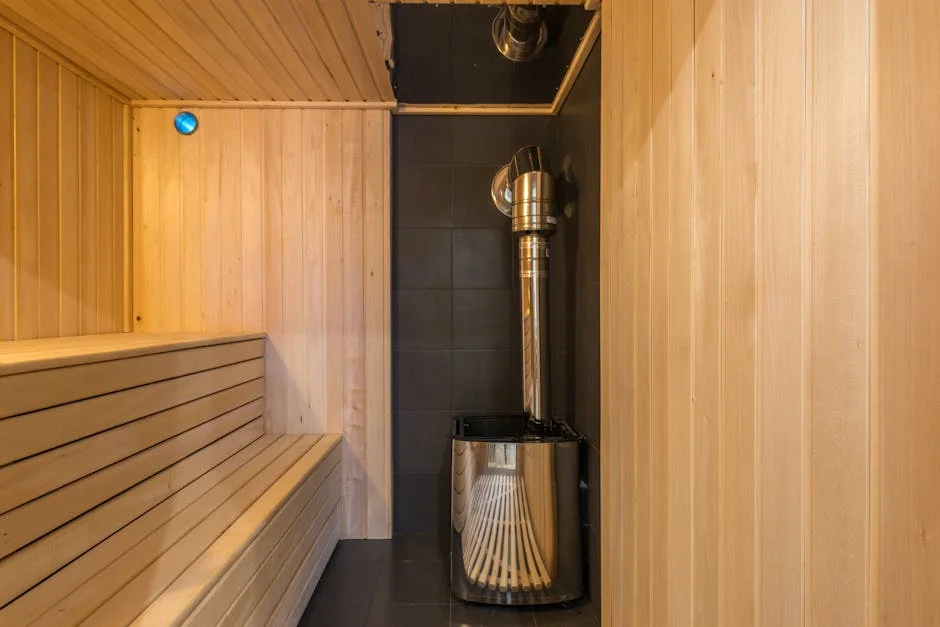
Flue routing is a closely related question. The chimney must be sized to match the stove’s flue collar diameter, must maintain proper draft, and must be routed to comply with local codes regarding height above the roofline and proximity to combustibles. Most sauna stove manufacturers specify compatible flue systems; using non-specified components can void the warranty and affect draft performance.
Before purchasing, confirm the available clearances in your sauna room and sketch the flue path. A stove that fits the kilowatt requirement may not fit the installation geometry.
Stone Capacity and Löyly Quality
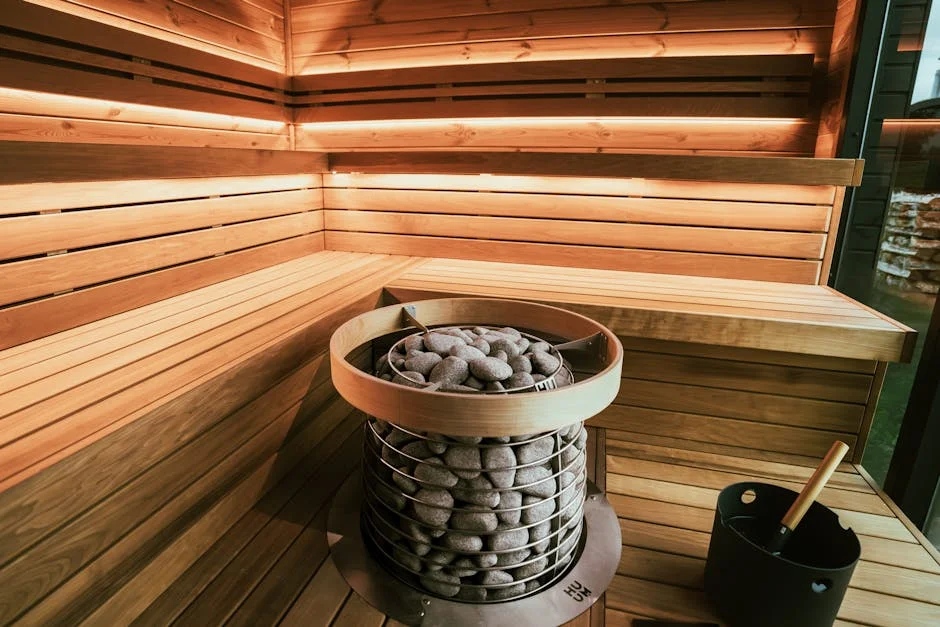
Stone mass is directly related to heat retention and löyly quality. More stones store more thermal energy, which means they recover faster after water is poured and maintain a more even temperature profile during a session. Stoves with shallow or undersized stone beds produce hotter steam that dissipates quickly, functional, but not the sustained soft steam that sauna traditionalists prefer.
Harvia and similar Finnish manufacturers typically publish stone capacity in kilograms. A 20-40kg stone load is typical for home-use stoves; commercial units carry more. The stones supplied with the stove are generally adequate for initial use, but many owners eventually replace them with specific stone types, olivine and vulcanite are common preferences in the r/Sauna community for their thermal stability and crack resistance.
Construction Materials and Longevity
The two dominant construction approaches for wood-fired sauna stoves are cast iron and stainless steel. Cast iron holds heat longer after the fire dies down and produces a characteristic radiant warmth, but it is heavier and more susceptible to thermal shock if water is poured directly on the firebox body. Stainless steel heats up faster, tolerates thermal cycling well, and is significantly lighter, relevant for shipping and installation.
The gauge and grade of steel matter considerably in stainless stoves. Thinner steel warps under sustained high heat; quality sauna stoves use heavy-gauge material and reinforced construction at high-stress points. Weld quality and door seal integrity are worth examining in owner reviews, as these are the points where lower-quality stoves show wear first.
For a broader look at how stove construction fits into the full range of wood-fired sauna options, barrels, cabin saunas, and outdoor structures, comparing across the category before finalizing a stove choice is a worthwhile step.
Top Picks
Harvia Legend Wood Burning Sauna Stove
The Harvia Legend is a cast iron wood-burning stove rated at 16kW, positioned toward the upper end of Harvia’s home-use lineup. Cast iron construction gives it excellent heat retention, the stove continues radiating warmth after the fire has died down, which is a practical advantage for long sauna sessions where you want sustained ambient heat rather than active firebox management.
Owner reviews consistently note build quality as a differentiating factor at this tier. The firebox door seals well, combustion is efficient relative to competing units in this output range, and the stone capacity is substantial enough to support multiple rounds of löyly without significant temperature drop. Harvia’s reputation in this category is well-established; the Legend represents their considered answer to what a reliable home sauna stove looks like.
The 16kW output is well-matched to mid-size sauna rooms. Verified buyers note that heat-up times are reasonable on seasoned hardwood, typically 45 minutes to an hour to reach proper sauna temperature from cold, depending on room insulation and ambient conditions. Wood consumption rate is moderate; this is not a stove that demands constant feeding once the room is up to temperature.
Check current price on Amazon.
Harvia Pro 20 Wood Burning Sauna Heater
The Harvia Pro 20 moves to stainless steel construction and steps output up to 24kW, a meaningful jump suited to larger sauna rooms, heavily used family saunas, or spaces with significant heat loss through glass or exterior walls. The stainless construction heats up faster than cast iron and handles thermal cycling well, which is relevant for sauna owners who fire frequently and need the room ready within a predictable window.
The adjustable feet are a small but genuinely useful feature. Uneven floors are common in outbuildings and backyard sauna structures, and a stove that can be leveled without shimming is easier to install correctly and keeps the door geometry aligned over time. Harvia includes sauna rocks with the Pro 20, which is standard for this tier.
At 24kW, the Pro 20 is overpowered for small rooms, pairing it with an appropriately sized space is essential for comfortable regulation. For larger builds or demanding conditions, owner reports support its capability to bring a substantial room to temperature efficiently and maintain it with reasonable wood consumption. The Pro 20’s stainless build also makes it a slightly better fit for humid coastal environments where cast iron requires more maintenance attention.
Check current price on Amazon.
Stove Door Glass for Harvia Wood-Burning Sauna Stoves
The replacement door glass for Harvia wood-burning stoves covers the M3, 20, 26, and 36 models, a compatibility range that makes it relevant to a significant portion of Harvia’s home-use lineup. Heat-resistant glass panels serve two functions: they allow visual monitoring of the fire without opening the door, which helps manage combustion without disrupting room temperature; and they replace a component that sees extreme thermal cycling and eventually degrades.
Door glass integrity directly affects combustion efficiency, a cracked or poorly sealed panel allows air infiltration that disrupts draft, increases wood consumption, and can reduce firebox temperatures. Owner accounts confirm that sourcing the correct replacement glass for Harvia stoves through third-party channels is frequently frustrating; having a known-fit option simplifies what should be a straightforward maintenance task.
Check current price on Amazon.
Comfort Glow Heat Circulating Blower for Wood Stove
Wood-fired sauna stoves are fundamentally passive radiant and convective heat sources, and for most sauna applications, that is exactly right. The Comfort Glow blower represents a different approach: active air circulation to distribute heat more evenly through a space, rated at 100 CFM and described by the manufacturer as whisper-quiet.
The use case here is specific. In a conventional sauna room with correct stove placement and bench layout, passive convection does the job. But in irregular spaces, converted outbuildings with unusual geometry, or sauna rooms where the stove position is constrained by installation factors, hot and cold spots can be persistent. Verified buyers note that the blower meaningfully reduces stratification in these situations without introducing objectionable noise levels, the whisper-quiet claim holds up in owner accounts across multiple reviews.
The two-year warranty is notable at this price band. For an accessory that lives in a high-heat environment and runs intermittently over years of use, warranty coverage matters more than it might for lower-stress applications.
Check current price on Amazon.
Upgraded Wood Burning Sauna Hot Tent Stove
This is a portable unit designed for hot tent camping, hunting camps, ice fishing shelters, and mobile sauna setups, situations where weight, packability, and multi-function capability matter alongside heat output.
The 2-in-1 design covers both space heating and cooking, with chimney pipe included. Owner reports from ice fishing and hunting camp use are consistently positive about its ability to heat a moderate-sized canvas or nylon shelter effectively. The sauna application is legitimate in mobile contexts, paired with a hot tent and a good steam setup, this stove produces a functional outdoor sauna experience without permanent infrastructure.
The trade-off relative to a permanent stove is durability and longevity under repeated heavy use. Portable stoves of this type are built lighter to save weight, which means thinner material and faster wear than a Harvia cast iron or stainless unit designed for permanent installation. For occasional seasonal use in a mobile context, owner consensus suggests this stove performs well. For regular year-round sauna use, a permanent installation stove is the stronger choice.
Check current price on Amazon.
Buying Guide
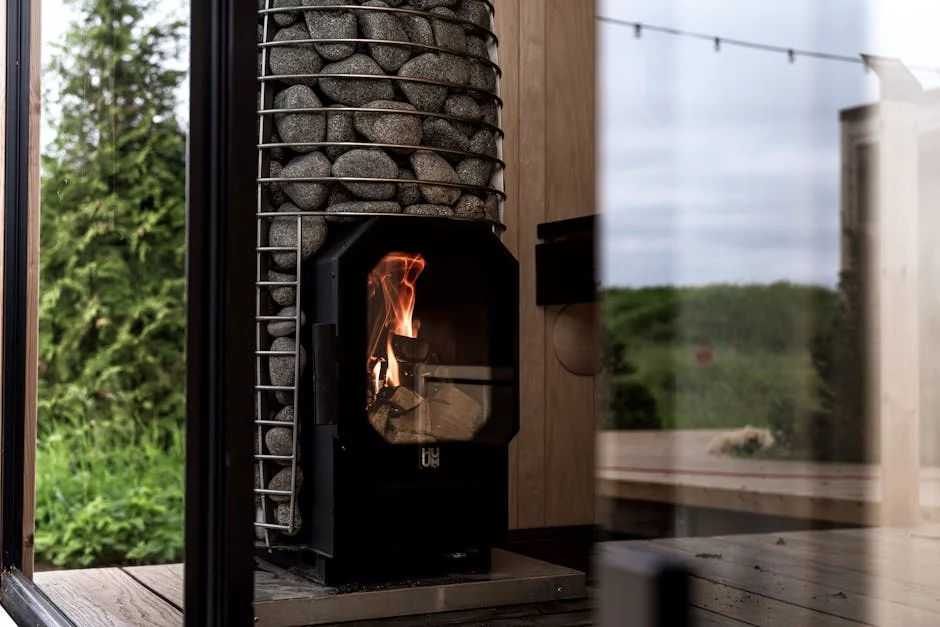
Matching Output to Room Size
The single most consequential decision in selecting a wood-fired sauna stove is matching kilowatt output to room volume. Finnish sauna heater manufacturers publish room volume tables, use them. The general rule is approximately one kilowatt per cubic meter of room volume, adjusted upward for poor insulation, large glass areas, or exterior wall exposure on multiple sides.
A stove sized too small for the room will run at maximum output continuously, producing slower heat-up times, higher wood consumption, and accelerated wear on combustion components. A stove oversized for the room produces extreme heat that’s difficult to regulate and can create an uncomfortable environment where the room hits temperature before the stones are properly saturated. Neither condition is what experienced sauna users are after.
For most home saunas in the 8, 15 cubic meter range, a 16kW unit like the Harvia Legend is appropriately sized. Larger rooms, 15 cubic meters and above, benefit from stepping up to 20kW or higher.
Installation Requirements Before You Purchase
Wood-burning stoves require more installation planning than electric heaters, and clarifying these requirements before purchasing saves significant time and expense. Non-combustible clearances must be maintained on all sides and above the stove body; the specific dimensions are listed in the installation manual and vary by model. Most Harvia stoves require a minimum floor protection area of non-combustible material beneath the firebox as well.
Chimney configuration is the other critical variable. The flue collar diameter, the vertical rise before any offset, the clearance through ceiling and roofing materials, and the height above the roofline all need to be confirmed against local building codes before installation begins. A compatible thimble kit for wall or ceiling penetration may need to be sourced separately. Exploring the full range of decisions involved in wood-fired sauna builds before committing to a stove is worthwhile if installation complexity is a new area.
Fuel Quality and Wood Consumption
Wood-fired sauna stoves perform meaningfully better on properly seasoned hardwood than on green or softwood fuel. Seasoned hardwood, oak, ash, birch, and maple are common preferences, produces a hotter, cleaner burn with less creosote accumulation in the flue. Birch is the traditional Finnish choice; it burns hot and produces a pleasant aroma.
Green wood produces significantly more smoke, burns cooler, and deposits creosote faster, which means more frequent chimney cleaning and reduced stove longevity if used routinely. The practical upshot is that fuel sourcing and storage are part of the ongoing ownership cost of a wood-fired stove, not just the purchase price. Plan for covered wood storage with adequate airflow; properly seasoned wood typically requires 12, 18 months of drying.
Cast Iron vs. Stainless Steel
Cast iron and stainless steel are the two dominant construction materials for wood-fired sauna stoves, and the choice between them is worth understanding before purchasing. Cast iron heats more slowly but retains heat longer after the fire dies down, continuing to radiate warmth into the room without active firebox management. This is particularly valuable in traditional sauna practice, where the session often continues well past the last load of wood.
Stainless steel heats faster and handles the thermal cycling of frequent firing and cooling better than cast iron over long service. It is also substantially lighter, which affects both shipping and installation. In high-humidity environments or coastal climates, stainless steel requires less maintenance attention than cast iron, which benefits from periodic conditioning to prevent surface oxidation.
Neither material is universally superior. The Harvia Legend’s cast iron suits buyers who prioritize radiant heat quality and long sessions; the Harvia Pro 20’s stainless construction suits buyers who prioritize fast heat-up and durability under frequent use.
Accessories That Affect the Ownership Experience
The stove is the center of the system, but several accessories meaningfully affect how that system performs in practice. Stone selection matters: the rocks included with most stoves are adequate to start, but many owners upgrade to olivine or vulcanite over time for better thermal stability and longer stone life. Stones crack when poured with cold water repeatedly; quality stones crack less frequently and retain heat more evenly.
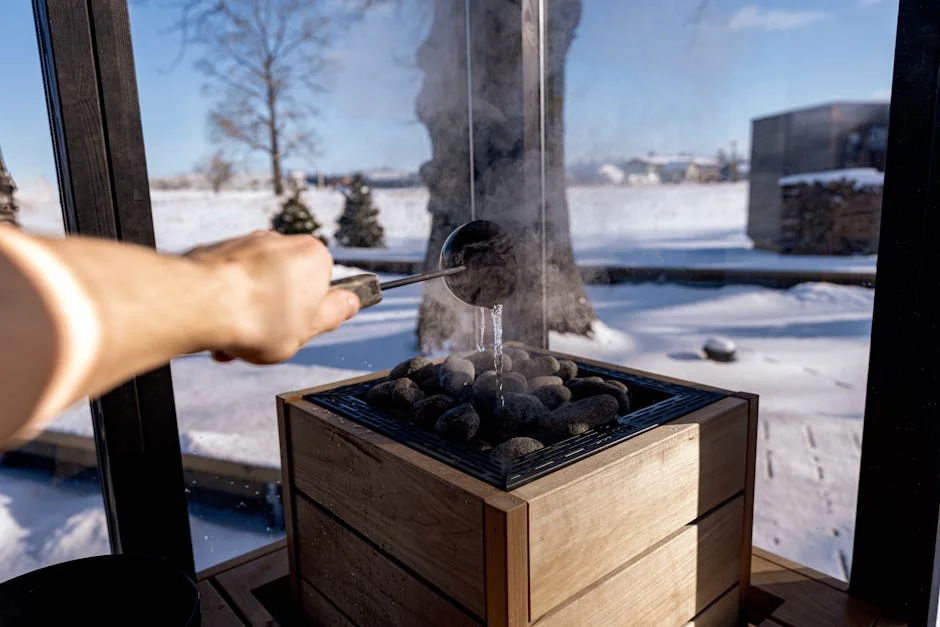
A quality ladle and bucket for löyly are functional requirements, not optional extras. Door glass condition affects combustion efficiency directly; if you’re purchasing a stove for an existing sauna setup, confirm the door glass integrity before the first firing. A stove thermometer mounted at bench level, not at ceiling height, where readings are deceptively high, gives accurate session temperature data. These supporting items don’t need to be purchased simultaneously with the stove, but planning for them as part of the setup cost is sensible.

Frequently Asked Questions
How long does it take a wood-fired sauna stove to heat a room to temperature?
Heat-up time depends on room size, insulation quality, ambient temperature, and wood species. Owner reports for a properly sized stove in a well-insulated home sauna room typically describe 45 minutes to one hour from a cold start using seasoned hardwood. Larger rooms, poor insulation, or very cold ambient conditions extend this to 90 minutes or more. Starting the fire with smaller kindling and building up gradually produces more consistent results than loading the firebox heavily at the outset.
Do wood-fired sauna stoves require electricity?
No. Wood-fired sauna stoves operate entirely without electricity, the fire provides heat, and convection moves air through the room naturally. This makes them well-suited to off-grid cabins, remote properties, and situations where electrical infrastructure is unavailable or undesirable. The only exception would be an accessory like the Comfort Glow blower, which requires power; that blower is optional and addresses specific room geometry problems rather than being part of a standard setup.
What is the difference between the Harvia Legend and the Harvia Pro 20?
The Harvia Legend is a 16kW cast iron stove suited to mid-size sauna rooms; the Harvia Pro 20 is a 24kW stainless steel unit designed for larger or more demanding spaces. Cast iron in the Legend produces longer heat retention after the fire dies; the Pro 20’s stainless construction heats faster and handles frequent thermal cycling better. Room volume and firing frequency are the two variables that most clearly determine which is the stronger choice for a given installation.
What type of wood is best for a wood-fired sauna stove?
Seasoned hardwood is the standard recommendation, oak, ash, birch, and maple are all reliable choices. Birch is the traditional Finnish preference: it burns hot, produces minimal creosote, and has a pleasant aroma. Softwoods like pine and spruce burn faster and leave more creosote in the flue, which requires more frequent chimney cleaning. Green or unseasoned wood of any species burns cooler and smokier and should be avoided.
Can a portable tent stove like the Upgraded model be used for a real sauna experience?
Yes, with realistic expectations about the context. The Upgraded tent stove is designed for hot tent camping, ice fishing, and mobile setups, not permanent sauna rooms. In a canvas or nylon hot tent, it can generate genuine sauna-range temperatures and support löyly. The experience is functional and legitimate for outdoor mobile use.

Where to Buy
Harvia Legend Wood Burning Sauna Stove, Traditional Wood Burning Stove for Indoor Heating, Premium Cast Iron Sauna Heater with Large Stone Capacity, Includes Sauna Rocks, Powerful 16kW CapacitySee Harvia Legend Wood Burning Sauna Stov… on Amazon